
Welcome back to Artificial Insights, Carol.
We have spent the last few weeks deconstructing the mechanics of working with AI. If thinking refines ideas, creating brings them into form, building makes them functional, deciding chooses their direction, and organizing keeps them coherent – then living is about where all of this touches the ground.
This is the sixth chapter in my series on collaborating with AI. It explores the most personal dimension: how intelligence weaves into my daily routines, health, and reflection.
I’ve found that living with AI isn’t necessarily about optimizing use of time, but rather having quiet, infinite context windows for the messy parts of life. For me, it reflects habits, mirrors moods, and offers a kind of presence that helps me notice more instead of just doing more.
How I live with AI:
Language fluency: I use AI to practice Dutch and French conversation. Unlike a rigid course, it adapts to my pace, corrects my grammar gently, and lets the topics follow my genuine curiosity. Mistakes become lessons in rhythm rather than failures.
Health context: I share sleep or exercise data to spot trends I might miss. The goal isn’t a quick fix but understanding the science—why energy dips, how recovery works. It functions less as a coach and more as an informed interpreter of my own body.
Nutrition clarification: Before changing habits, I use AI to understand how foods interact with inflammation or digestion. It helps me build a mental model of my metabolism so I’m not just following rules, but understanding principles.
Empathy rehearsal: For difficult conversations, I test phrasing and tone with AI first. It helps me find words that are honest without being escalating, turning anxiety into preparation.
Routine tuning: When days feel out of sync, I describe the friction to AI. It often points out where context-switching is draining energy and suggests small realignments to restore rhythm rather than force productivity.
Symbolic mirroring: I sometimes describe dreams or vague feelings to see them reflected back through psychological or mythological lenses. It doesn’t “solve” the meaning, but it provides a framework to think about the subconscious.
Living as a centaur – half human, half augmented – is ultimately about balance, or using intelligence to stabilize the noise of life so you can hear yourself think.
Until next week,
MZ
P.S. You should check out the new www.envisioning.com – we’re rolling out a couple of useful ways of engaging with our research, and I’d love your feedback on it. We have published 2.500+ emerging technology descriptions across dozens of industry hubs, from the future of beauty, the future of apparel to the future of death. Try the homepage chatbot or search our industry hubs. All free.
Quick Links:
Love this. Prompting skills are about having mutual theory of mind - or the ability to put yourself in the mind of the AI. Paper: “Quantifying Human-AI Synergy” by Christoph Riedl & Ben Weidmann, 2025. Via Carlos E. Perez on X.
This was all over my feed this week: Claude Interviewer, an glimpse of future market research.
AI in toys: Stickerbox (voice to image + thermal print).
AI Eats The World. Ben Evan’s yearly recap of the state of AI. Also in video format.
Claude’s Soul Document (via Richard Wolfe)
Programmable Biology (via Chris Rimmer)
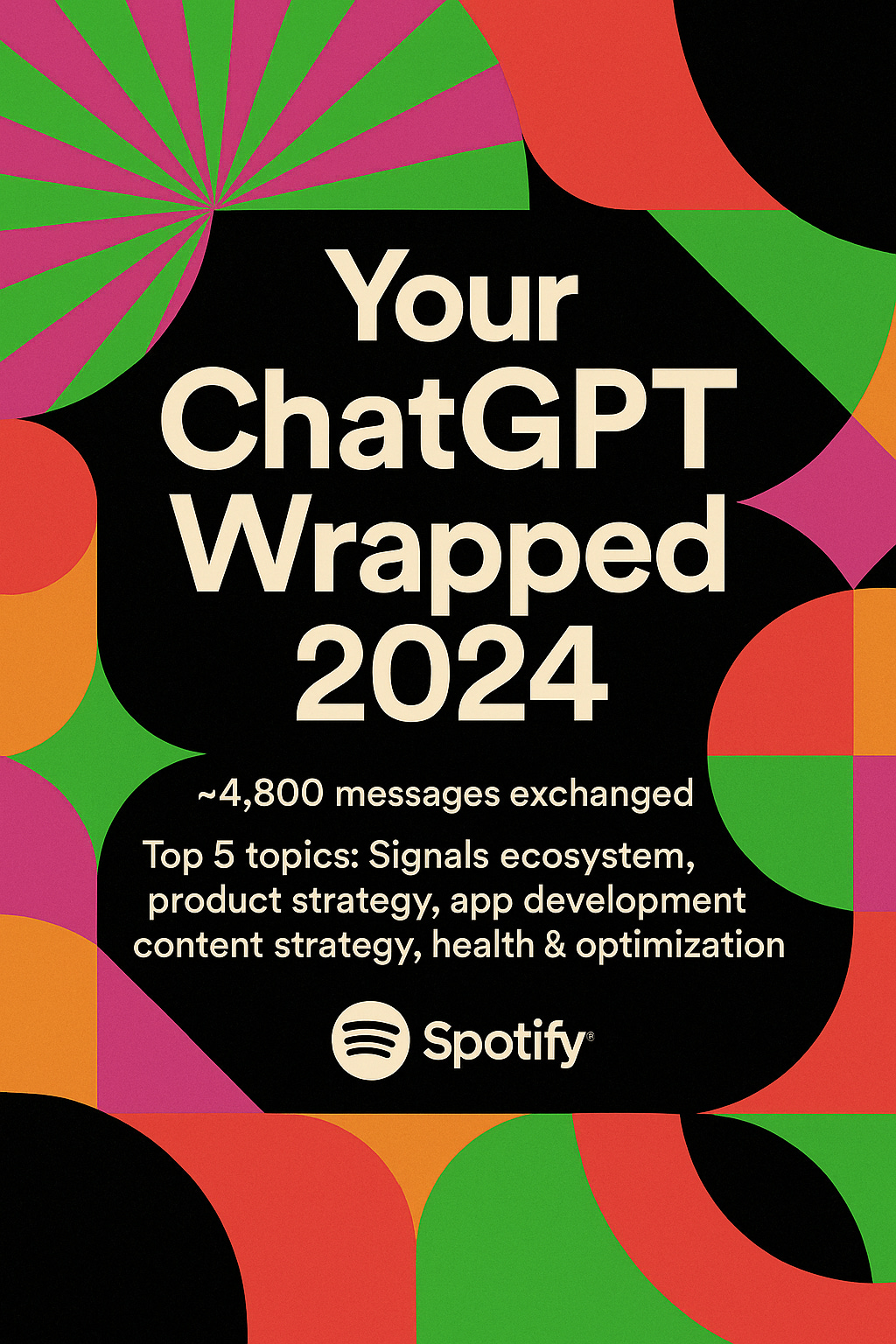
If you have memories enabled in ChatGPT, try this prompt for your own generative overview of how you use it (via Monique Van Dusseldorp):
‘’Make me a ChatGPT Wrapped for the past year: Summarise the year for me in Spotify Wrapped style, including the number of messages I sent, the topics I used the most, funny highlights, fun statistics (like the words I use the most), top 5 topics or conversations, and a description of my user style.”
Ask Anthropic’s Amanda Askell Anything
Michael Levin on Lex Fridman (3h20min)
There are so many types of intelligence out there.
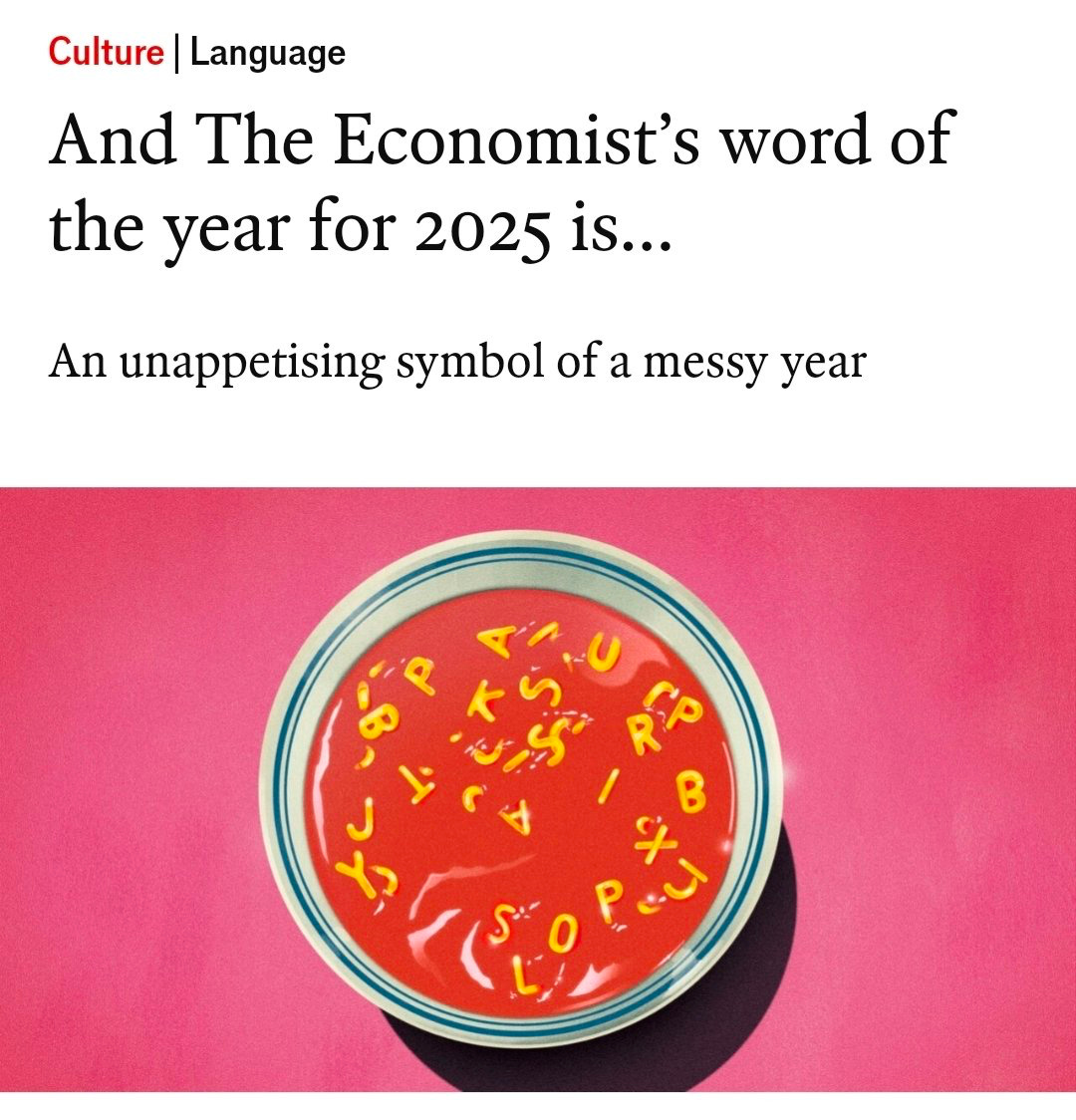
Slop is The Economist’s word of the year
If Artificial Insights makes sense to you, please help us out by:
📧 Subscribing to the weekly newsletter on Substack.
💬 Joining our WhatsApp group.
📥 Following the weekly newsletter on LinkedIn.
🦄 Sharing the newsletter on your socials.
Artificial Insights is written by Michell Zappa, CEO and founder of Envisioning, a technology research institute.
Thanks for reading Artificial Insights! Subscribe for free to receive new posts and support our work.