


Welcome back to Artificial Insights, your irregular dispatch from the near future.
There’s a recurring meme on Twitter that to stay on top of AI you basically have to be unemployed.
And it’s not wrong about the firehose. Not a week goes by without some revolutionary model or paper, and the trillions being poured into the labs guarantee it keeps coming for the foreseeable future. But I’ve started to think the meme gets the diagnosis backwards. The people who actually keep up aren’t the ones reading the most. They’re the ones building the most. Keeping up with AI is a building problem, not a consumption one.
That’s the shortcut nobody puts on a slide: you don’t come to understand these tools by watching them scroll past, you understand them by pointing them at something you actually care about. Everything I know about where the frontier really is, I learned by trying to make it do something for me.
I’ve written before about how my own efforts mostly come down to fixing my “software-shaped problems.” Vibe coding – using AI to build solutions to my personal and professional workflows – is by far the most effective way I’ve found of turning tokens into practical effects. Your leverage might vary, but my heuristic for what’s worth building stays the same: does this tool nudge me toward better behavior? Either implicitly, by taking work off my plate that never needed me in the first place, or explicitly, by literally reshaping how I spend my time.
Some of these tools are built for an audience of one and near-impossible to generalize. Others turn out to have broader appeal and are worth bringing to market. The most personal one I’ve spent serious time on manages the open loops of life – habits, chores, training, nutrition, tasks – with full support of your favorite AI tool via MCP and private iCloud data. The version that finally stuck is almost boringly simple: I easily input structured or unstructured information – and it handles the logging, the streaks and the follow-ups without me juggling multiple apps. A simple UX wrapped around a powerful model has done more for my actual behavior than any amount of willpower. It’s called Septena, and I’ll have a proper announcement when it lands on TestFlight.
If Septena is that idea at the scale of one person, Signals is the same bet at the scale of an entire sector. It’s our generative research platform, and it’s the next big thing keeping us busy at Envisioning. We’ve spent the last year piloting and prototyping with clients across the innovation space, and we’re starting to roll out access to early users this month. We’ll be hosting demo sessions on different topics and industries starting next month (Aug 18) on AI Agents in the Enterprise, with a lot more to share in future issues.
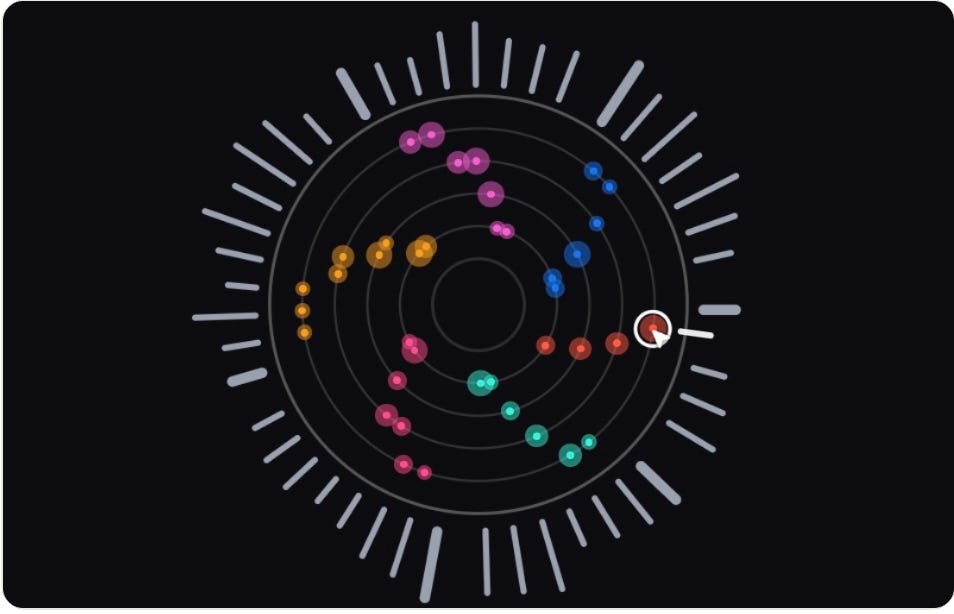
Building software with AI is really about exploring the potential of your own ideas. Everyone I talk to has visions and projects they’d love to chase, and vibe coding has been an incredible asset in helping non-technical people – like myself – level up and give shape to their imagination. For us at Envisioning, that same instinct is what lets innovation teams be certain they’re aware of everything moving on the horizon.
So no, you don’t have to be unemployed to keep up. You just have to stop trying to read the whole horizon and start building toward the part of it you care about.
Until next week,
MZ
P.S. I am planning a move away from Substack onto our own (vibe-coded) platform. Your subscription will be migrated automatically later this year, but you can sign up for a preview today.

Decoy Font: A TTF font that hides what you’re typing from AI. Type a message where each letter contains a decoy. — @GIGAZINE(ギガジン)
Take Your Coding Agent Back (18 min)
Mario Zechner (badlogic) on why he ditched Claude Code and OpenCode for pi, a self-modifying agent whose entire system prompt fits on a slide, with just four tools: read, write, edit, bash. His thesis: post-trained models already know they’re coding agents, so the 10,000-token harness prompt is dead weight, and Terminal Bench’s minimal tmux-only agent outscoring native harnesses proves it.
You don’t need 10,000 tokens to tell them, ‘You’re a coding agent.’ They know, because they are coding agents now.
Reshaping Society’s Core (86 min)
Anthropic co-founder Jack Clark and the Aspen Institute’s Samuel Kimbriel on how to build a vision for a society being rewired by AI, less a technical briefing than a philosophical one. Clark also writes the Import AI newsletter, Kimbriel runs Persona.
Consciousness as Software on Meat Computers (57 min)
Author Michael Pollan joins Chris Hayes to unpack “computational functionalism,” Silicon Valley’s working assumption that consciousness is software you could just port to silicon, and why his new book A World Appears starts its case for sentience with plants rather than machines. Features detours through David Chalmers’ hard problem, William James, and psychedelics as a windshield-smudge that makes consciousness visible.
They basically see consciousness as software that we run on these meat computers, but there’s no reason you couldn’t run it on the proper silicon computer.
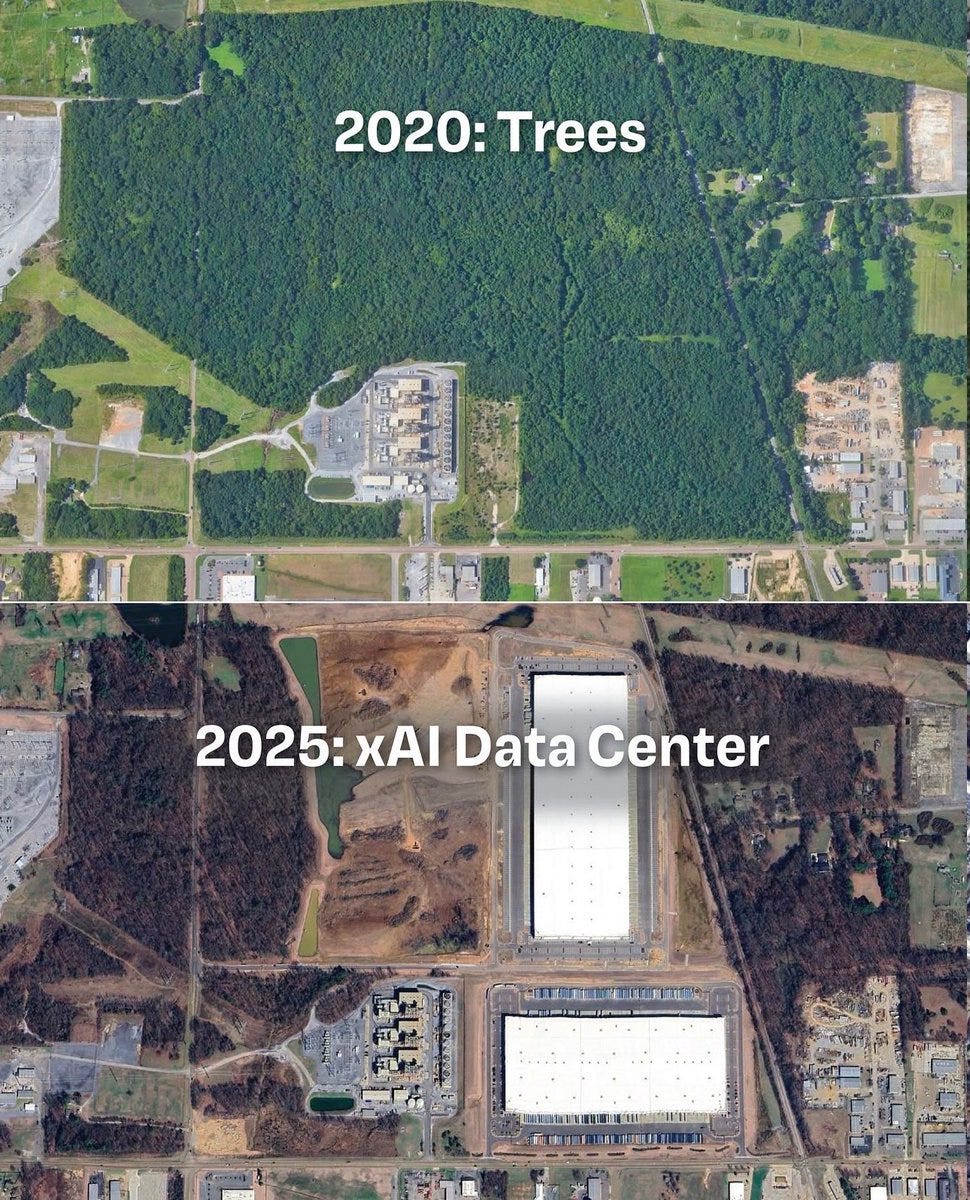
Image from 2020 vs 2025 in Memphis, TN • Via: Matter Neuroscience — @Michael
Events
Upcoming events from Envisioning
AI Agents in the Enterprise · Tuesday, August 18, 2026
4:00 PM CET · 10:00 AM ET · 7:00 AM PT · 10:00 PM SGT
Join us for the launch of our monthly live Signals series: a live STEEP scan on what autonomous AI agents change for how work gets organized, staffed, and governed. Register

Brasil Futures Forum · Monday, August 24, 2026
We are supporting and participating at the Brasil Futures Forum 2026 in Rio de Janeiro. Join us throughout the weekend if you’re around! Register
Vocab
Newly added to our AI & ML lexicon
Red Queen Hypothesis: Evolutionary arms-race theory: species must constantly adapt to survive against co-evolving rivals.
Over-Refusal: Anti-pattern where AI models refuse legitimate user requests to appear safer, reducing real-world utility.
Fake Chain-of-Thought Attack: Direct prompt injection that mimics chain-of-thought reasoning to bypass AI safety guardrails.
Safety Flywheel: Iterative cycle where frontier AI models help train safer successor models, compounding robustness over generations.
Intelligence Density: A measure of how much useful model capability fits into each gigabyte of memory.
Explore 1,400+ more terms in the Envisioning lexicon.
Quick links
NYC may require landlords and realtors to disclose the use of AI in listings
“The AI stagings warp the room to fit furniture that would 100% certainly not fit there. It’s deceptive, and I’m glad it at least requires disclosure now (although I wish it were fully banned)” · plants on HNThe Kimi K3 Moment
“This is not a watershed moment. It’s a competitor converging to the same capability and trying to undercut your prices, but not by a lot.” · credit_guy on HNOur Approach to Bioresilience: Isomorphic Labs and Google DeepMind
“The same goes for AlphaGenome - it only takes a few hours to train the model, but it’s freaking amazing what it can predict.” · mbeavitt on HN
Research
From Envisioning’s research hubs
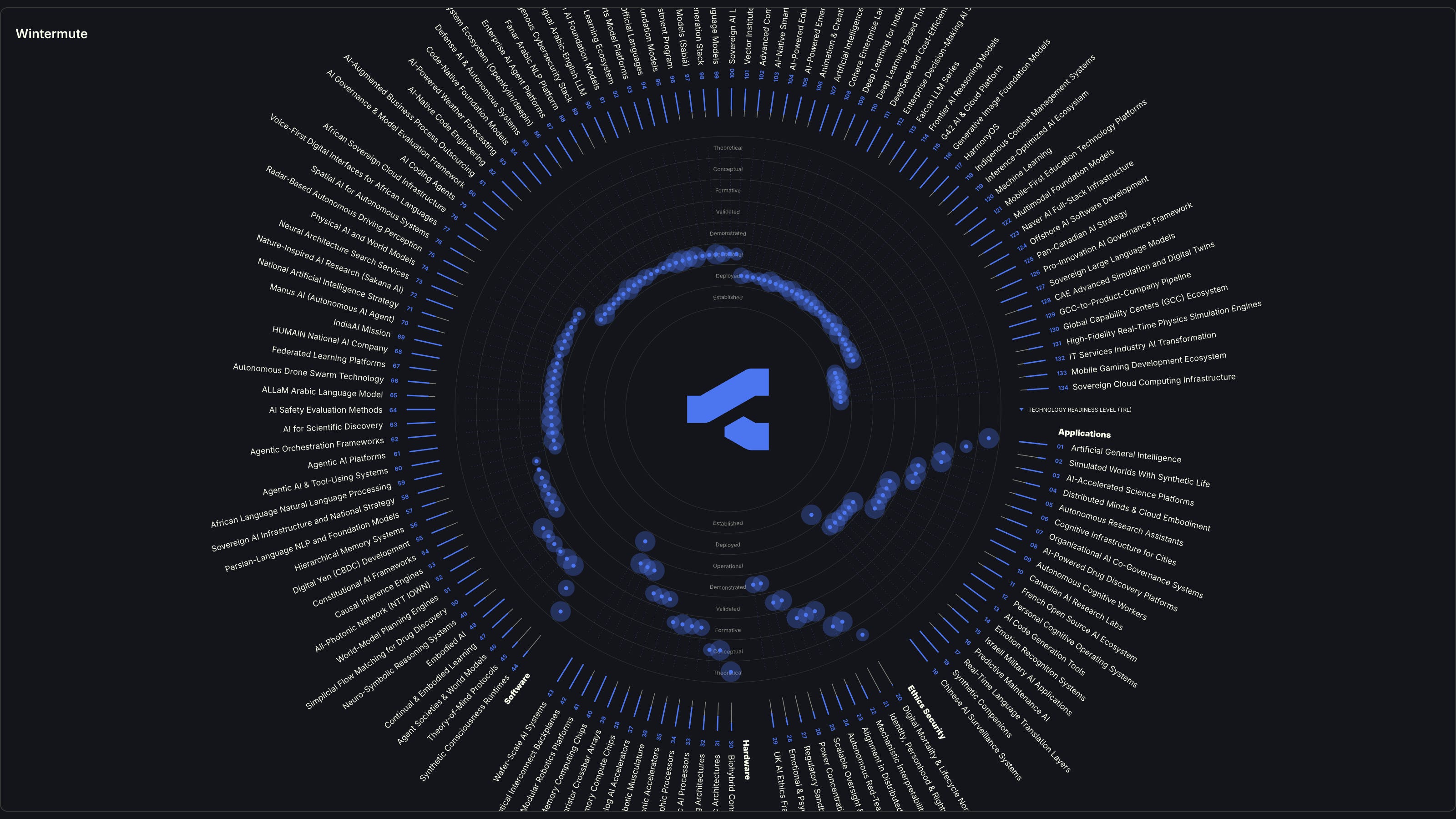
Wintermute
Apple’s teaser for its Neuromancer adaptation means a lot of people are about to meet Wintermute, the scheming AI, for the first time, which is exactly why we named our AI hub after it. Wintermute covers AI systems, autonomous agents, synthetic cognition, and machine-driven intelligence architectures. Gibson imagined an intelligence quietly assembling itself out of separate parts, and that is closer to where agent research is going than the single-brain story usually told. Some things worth exploring inside: Agent Societies & World Models, Distributed Minds & Cloud Embodiment, and Alignment in Distributed Cognition. Share it with the friend who still quotes the novel from memory.
If Artificial Insights makes sense to you, please help us out by:
📧 Subscribing to the weekly newsletter.
💬 Joining our WhatsApp community.
📥 Following the weekly newsletter on LinkedIn.
🦄 Sharing the newsletter on your socials.
Artificial Insights is written by Michell Zappa, CEO and founder of Envisioning, a technology research institute.