

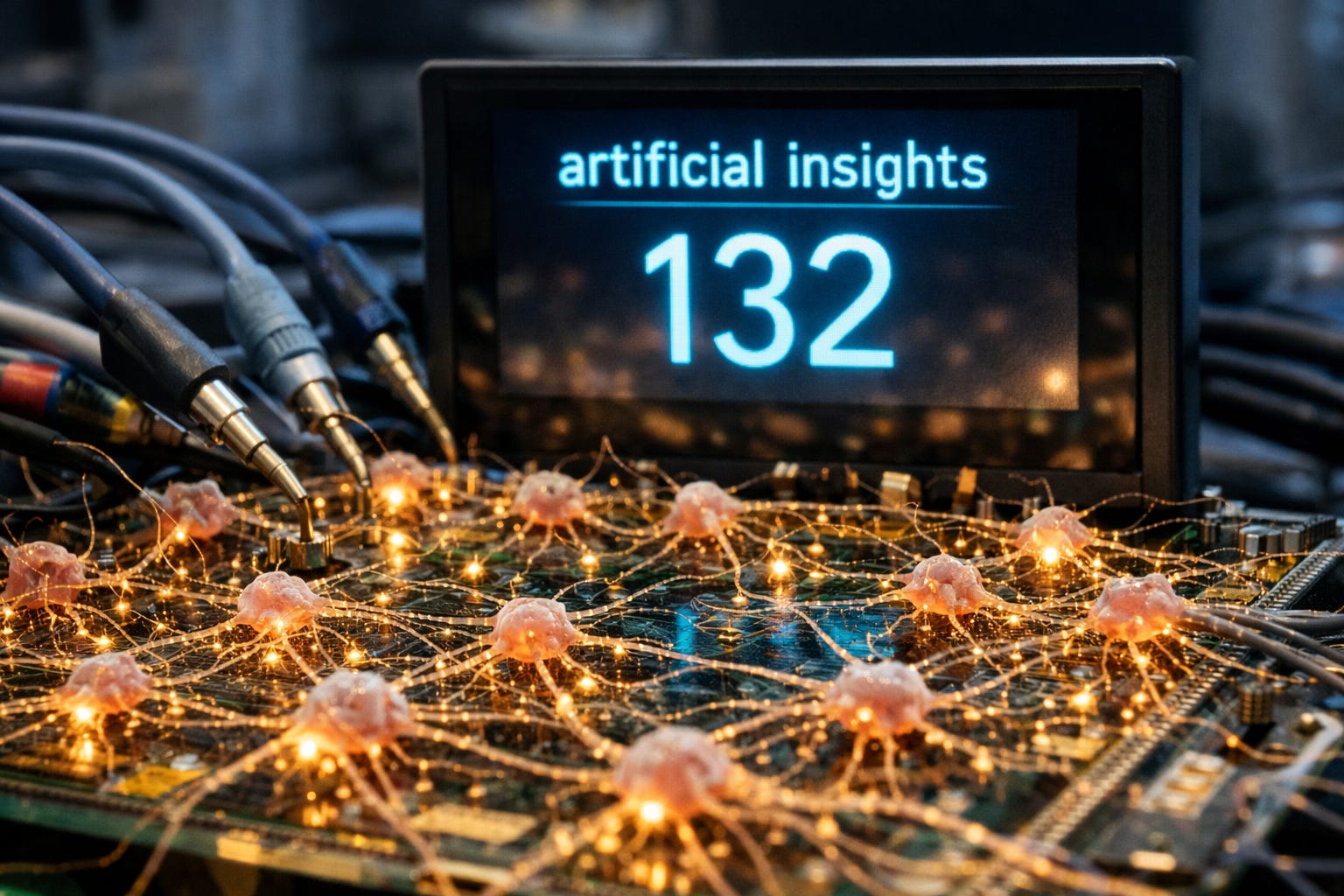
A company called Eon Systems just demonstrated what appears to be the first whole-brain emulation that produces multiple behaviors. They took a complete computational model of a fruit fly brain – 125,000 neurons, 50 million synaptic connections, mapped from electron microscopy data – wired it into a physics-simulated body in MuJoCo, and watched it move. Not an animation. Not reinforcement learning mimicking biology. A copy of a biological brain, running in simulation, driving a body through naturalistic behaviors. Their next target is a mouse brain (70 million neurons), and eventually a human one.
Separately, Cortical Labs is going in the opposite direction. Instead of copying biology into silicon, they’re growing 200,000 human neurons on a chip and letting them compute directly. Their cells taught themselves to play a simplified implementation of DOOM in a week – down from 18 months for Pong on older hardware. Each unit costs $35,000, a full rack draws under 1,000 watts, and they’re already shipping hardware and selling access through what they call “Wetware-as-a-Service.” The investor list includes In-Q-Tel, the CIA’s venture arm.
Two directions, same destination. One team copies a biological brain into a machine. The other grows biological neurons and puts them to work.
Both are proving that intelligence isn’t about the substrate – it’s about the wiring. If Eon can scale from a fly to a mouse to a human connectome, and Cortical Labs can scale from DOOM to real-world tasks, the distinction between “artificial” and “biological” intelligence stops being a category and starts being a spectrum. We’re not there yet. But for the first time, both sides of that spectrum are moving toward each other.
MZ
Multi-Model Intelligence
We at Envisioning have been working on technical approaches for performing research across multiple AIs. Instead of trusting the output of a single frontier models, we have developed different ways of combining and comparing generative reponses in order to create higher quality research. If this is something you are interested in, join us for a demo of our Signals platform on March 31.
Complex challenges and signals of change
Speaking of generative research, I am bringing our tools and methodologies to the World Beautiful Business Forum in Athens in May together with our friends at C3Labs. Let me know if you’re around!
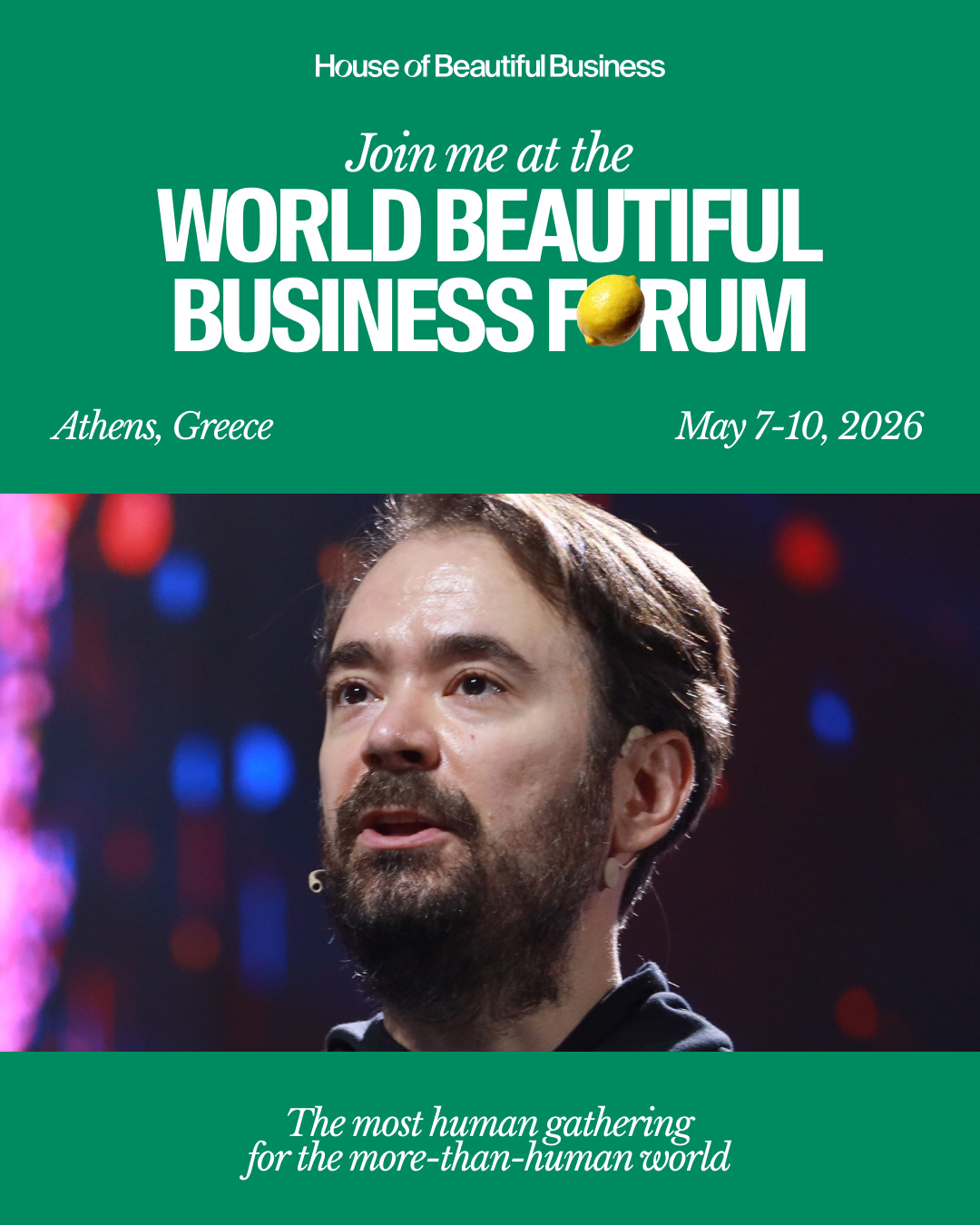
Five main-stage acts inspired by Greek drama, more than 100 speakers, facilitators, and performers across more than 80 concurrent sessions, organized into 10 immersive program tracks and 1 powerful community. They offer distinct paths toward a life-centered economy, developed in collaboration with guest curators and partners.
Why the Pentagon Wants to Destroy Anthropic (1h10min)
Ezra Klein digs into the escalating tension between the US military establishment and Anthropic - a company that simultaneously took a Pentagon contract and drew hard lines about what its models can be used for. The interview maps a collision course between national security demands and AI safety principles that neither side can easily win.
Inside OpenAI’s Military Deal (16 min)
ColdFusion breaks down OpenAI’s expanding relationship with the US military - how a company that once refused defense contracts ended up there, what the deal actually covers, and why it matters for the broader AI industry.
The Human Economy in the Age of AI (14 min)
Ben Pascut argues for reframing the AI-and-jobs conversation around what humans uniquely contribute to economic value - not just “what jobs survive” but what a human-centered economy actually looks like when machine labor becomes abundant.
How do you track a war in real time? (25min)
An investigation into vibe coding and real-time conflict tracking.
If Artificial Insights makes sense to you, please help us out by:
📧 Subscribing to the weekly newsletter on Substack.
💬 Joining our WhatsApp group.
📥 Following the weekly newsletter on LinkedIn.
🦄 Sharing the newsletter on your socials.
Artificial Insights is written by Michell Zappa, CEO and founder of Envisioning, a technology research institute.
One of my greatest lessons in grad school decades ago was my hubris of thinking you could model the brain deterministically from a finite element analysis approach by working from the bottom up. It’s telling to see people today repeating the same mistakes.