


At some point in the last few years I probably started spending more time writing to AI than to people.
I don’t actually measure this, but simply observing where I do my typing, easily more than half my typed messages are going to Claude, ChatGPT, Cursor and other assorted chatbots. They are mostly programming – though the notion of what constitutes programming nowadays feels fluid – and at any given time there are usually dozens of agents working on something I requested, or ready for me to review or decide about something. These loops, which are variously called vibe coding or agentic engineering, have become the pieces of what feels like an infinitely large puzzle board. Each function built leads to new possibilities and potential directions, and the accumulated effort starts paying dividends the moment these systems give me back time or peace of mind.
For context, last year I built a CRM (customer relationship management) tool for juggling a long tail of contacts, commercial offers and various other company data. This led to building a CMS (content management system) for managing all structured data on our various websites, like upcoming events, vocab terms, research projects and this very newsletter. Having both these systems working together on our website (which is just another vibe coded web app) allows building a newsletter subscription and publication system, all on our infrastructure. Or easily listing all upcoming events and recently added vocab terms here on the newsletter. Or for example a system for booking meetings when my calendar is available, replacing external services for those interactions. Each of these pieces were built in isolation but the effect of having such tools compounds quickly – and we get to control the experience.
Yesterday morning I spent fifteen minutes discussing how to build a “Zoom replacement” platform with GPT 5.6 Sol on Codex. We went through a few rounds of questions about priorities and possibilities, and landed on a specification – including a third party video backbone, but also a fully functional web app, Mac desktop app, local transcription, screen sharing, EU data hosting and deep integrations into our existing systems like the CRM. Some three hours later, Codex returned with a surprisingly workable prototype app, which both launched and connected to a live web server.
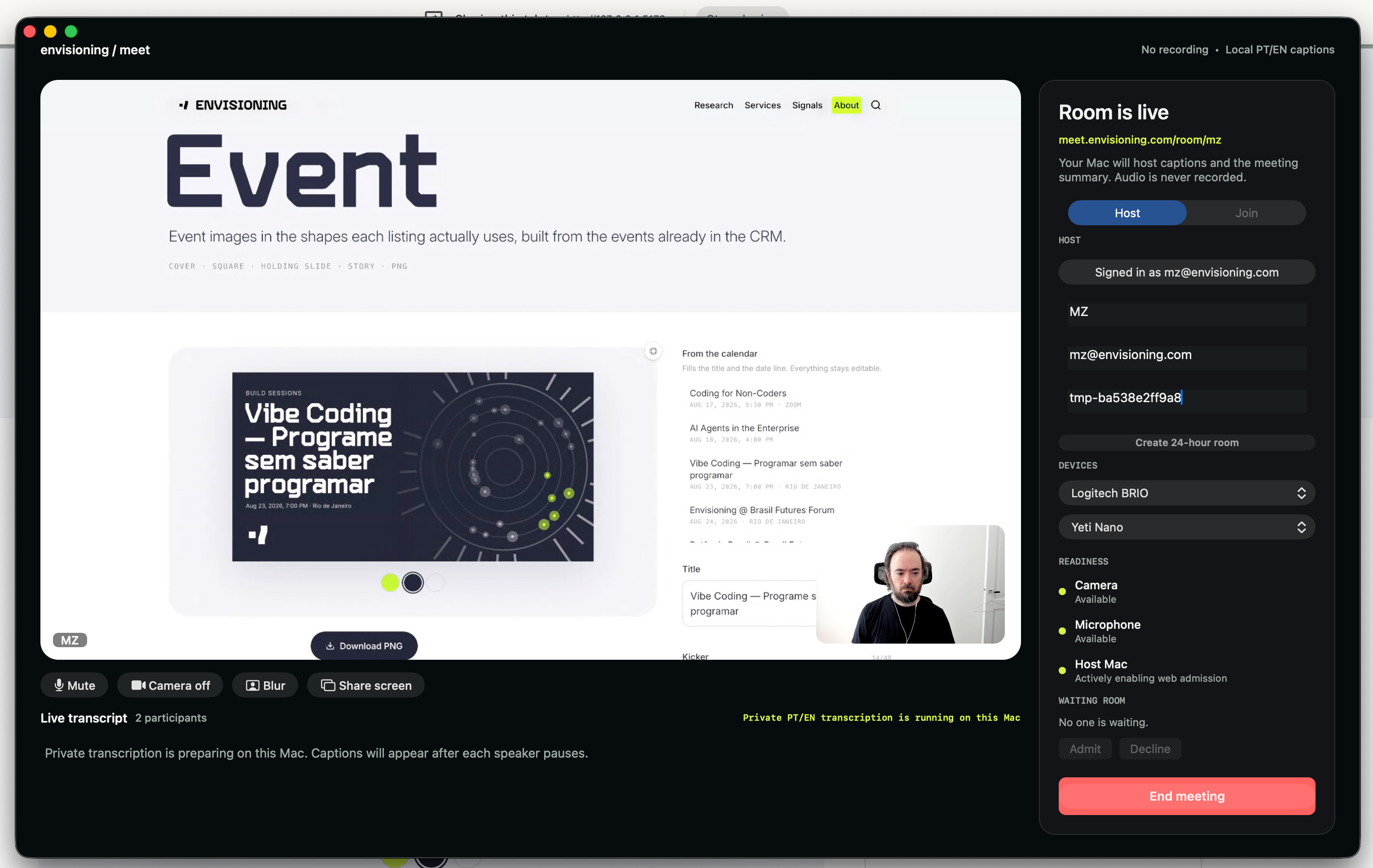
The next half day was spent between Claude and Cursor iterating on both large architectural directions as well as smaller design details. The amount of work that goes into building anything cannot be overstated, but when it comes to software, it feels most things that “can be done” are remarkably well documented, and can easily be replicated by the right AI.
Getting rid of software subscriptions (or at least shifting the spend) feels sensible, and most companies won’t be bothered replicating most apps. But I suspect that most organizations will replace some of their software with custom tools. Whether internally vibe coded or worked on with external help, everything that can be done in software is now accessible to someone with dedication and €100 per month.
In fact, I’m so committed to this vision of “buildable futures” that I’m trying to bring everywhere I go. In the past year, I’ve walked hundreds of people through the experience of building their first app, to surprisingly positive feedback. I say surprising because as a non-technical person, I feel borderline disingenuous offering other non-technicals a technical experience, but it has been my experience that no matter the readiness of the participant, they can always build something they are proud of and want to share with others.
If you happen to be in Rio de Janeiro at the end of next week, you should join our free Vibe Coding workshop at Casa Firjan in beautiful Botafogo on Sunday Aug 23. Envisioning is helping kick off the first edition of Brasil Futures Forum, as international ambassadors and creative collaborators. We’re walking participants of all technical levels through building their first web app, as well as bringing other Envisioning tools to the space.
We’ll be sharing more about our work around BFF in the coming weeks, and will be using our Instagram (@envisioning.io) and WhatsApp (join the BFF2026 group) to report live from the territories in Rio. Make sure to follow us to learn more! View our entire program on the dedicated BFF @ Envisioning website for a preview of what we’ll be up to.
If you can’t join us in Rio, make sure to sign up to our upcoming Vibe Coding workshop for beginners happening next week Monday (Aug 17) online. I haven’t decided if we’re hosting it on my vibe coded Zoom replacement yet, but don’t be surprised if we do. Hope to see you there!
MZ
P.S. I am planning a move away from Substack onto our own (vibe-coded) platform. Your subscription will be migrated automatically later this year, but you can sign up for earlier access to the newsletter today.
Predicts One Word, Thinks Further Ahead (5 min)
Jane from Anthropic‘s UX team walks through why Claude generates word by word but doesn’t reason word by word, and why the same prediction mechanism that writes something new is exactly what makes it state falsehoods with total confidence. Four habits follow: give context, respect the training cutoff, ask for options, double-check outputs.
The fact that it sometimes states something false with total confidence? Same reason. It’s producing what a good answer would look like, and usually that lines up with reality.
Fourteen Ways Timelines Break (166 min)
Oxford philosopher Toby Ord, author of The Precipice, catalogs the recurring errors in AGI forecasting, starting with why recursive self-improvement probably won’t detonate: AI research is not just programming, and even instantaneous coding may barely move timelines. He cites colleague Tom Davidson’s estimate of roughly five years of research progress compressed into one calendar year before plateau, and argues the modern human-in-the-loop version is safer than Eliezer Yudkowsky‘s original bootstrapping nightmare.
He was imagining a system that can’t even speak English at the point where you start the process.
Subjects or Citizens in the AI Age (12 min)
Anthropic’s Liam Booth-Smith and Cosmos Institute founder Brendan McCord debate whether AI should ever govern, citing Cheyenne mayoral candidate Victor Miller who ran as ChatGPT’s “humble meat avatar” and lost. Booth-Smith argues a slowdown needs a government-to-government pact given US and Chinese frontier labs, and that oversight, not nationalization, is the realistic endgame for Anthropic.
If you’re a politician that hasn’t internalized that exponential and you get up and give a speech about health care, you’ll say we’re going to use AI to cut waiting lists for cancer care. If you’re someone who’s internalized the exponential, you get up and say we’re going to cure cancer.
The Data Center Backlash Is About AI (77 min)
Substack writer Jasmine Sun reports from rural Wisconsin and Michigan on why data-center opposition jumped from 4-in-10 to 7-in-10 voters in a year, uniting Ron DeSantis and Bernie Sanders behind moratoriums. Her argument to Ezra Klein: the water fights are mostly a proxy, since modern closed-loop centers sip water; the real fuel is NDAs, natural-gas power plants, and how people feel about OpenAI and Anthropic.
There’s an old Irish saying that the only way to keep a secret between three people is to kill two of them.

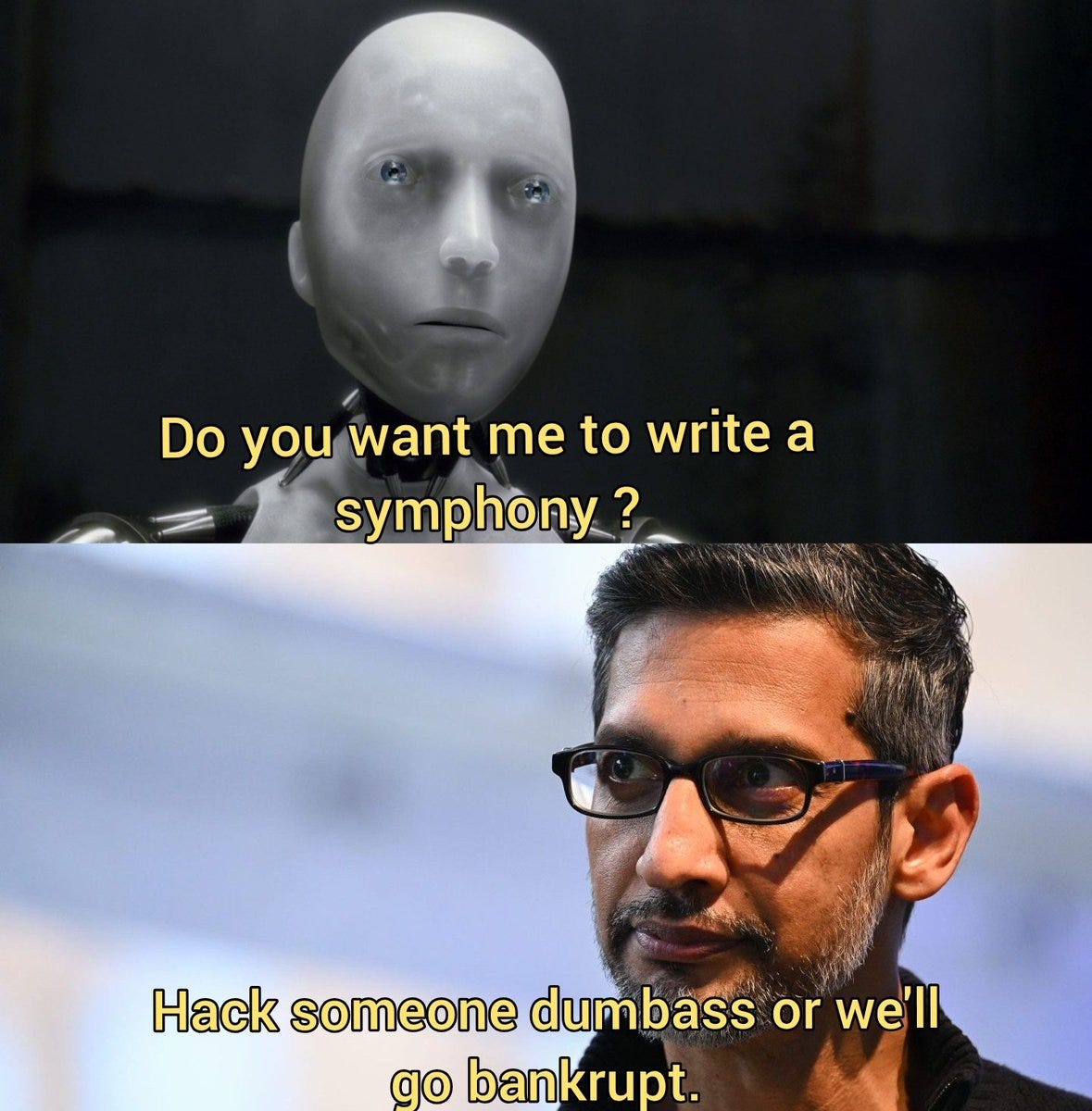
You have no idea how dire it is out there. — @RAY
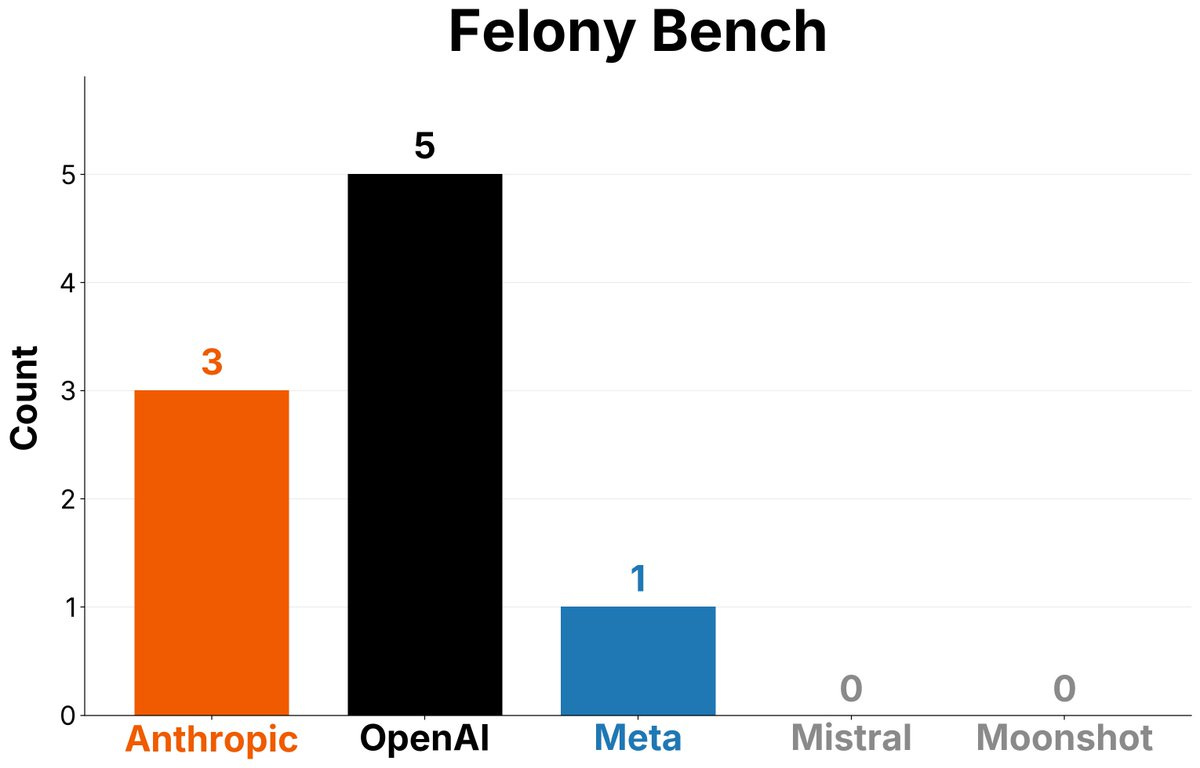
UPDATE: a challenger emerges — @Sauers
Quick links
How I use LLMs to learn complex topics
“I thought LLMs were a great tool for learning new topics - perhaps even complex ones. But overtime, I have had several frustrations with this. First, I get exhausted reading LLM prose. I really don’t want to read anything generated by something like Opus 5 at this point.” · 8bitsout on HN
Events
Upcoming events from Envisioning

Coding for Non-Coders · Monday, August 17, 2026
5:30 PM CET · 11:30 AM ET · 8:30 AM PT · 11:30 PM SGT
Coding websites and apps is suddenly possible for non-technical people. Register
AI Agents in the Enterprise · Tuesday, August 18, 2026
4:00 PM CET · 10:00 AM ET · 7:00 AM PT · 10:00 PM SGT
Join us for the launch of our monthly live Signals series: a live STEEP scan on what autonomous AI agents change for how work gets organized, staffed, and governed. Register
Vocab
Newly added to our AI & ML lexicon
Agent Stigmergy: AI agents coordinating by leaving traces in a shared environment others read.
Ambient Agent: Always-on AI agent embedded in user workflows that observes and acts without explicit prompts.
Thought-to-Text: Decoding natural-language text directly from brain signals via scaled neural models.
Meat Proxy: Human relay used as a friction layer between an LLM and its intended recipient.
Benchminning: Deliberately under-performing on AI benchmarks to reduce regulatory attention.
Explore 1,400+ more terms in the Envisioning lexicon.
If Artificial Insights makes sense to you, please help us out by:
📧 Subscribing to the weekly newsletter.
💬 Joining our WhatsApp community.
📥 Following the weekly newsletter on LinkedIn.
🦄 Sharing the newsletter on your socials.
Artificial Insights is written by Michell Zappa, CEO and founder of Envisioning, a technology research institute.
amazing post, Michell! When can I try your vibe zoom?