

A couple of years ago, I decided to start interviewing people to better understand how they think about technology. Every day for 100 days I asked someone different the same 15 questions, and gathered their responses in a notebook.
The first question was always: do you feel like the world is speeding up?
Almost everyone replied the same way: yes, of course it is.
Some were even shocked by the question and its obvious answer.
In so many ways, the perceived rate of change of the world around is giving acceleration. Rationally we know that’s impossible, but lived experience is subjective, and how we feel about change affects how we respond to it.
If this was true years ago, it has probably gotten even worse today. My own morbid fascination with the real-time news cycle and the rapidly evolving state of the world feels a lot like watching the end times unfold.
Consciousness philosopher and early technology adopter Terence McKenna noted around the turn of the millennium how the internet was attracting our perceived collective timeline into a transcendental object at the end of time. When everything is connected to everything else, when all distance is collapsed, new universal phenomena emerge, and we perceive the present as if we were standing at the edge of a black hole, watching all possible futures compress into an eternal now.
Maybe this is why so many of us oscillate between exhaustion and exhilaration, between doomscrolling and logging off entirely.
We’re trying to find a rhythm that no longer exists, a pace we can no longer set for ourselves. The question I asked wasn’t really about speed at all. It was about whether we still have agency in how we experience time, or whether we’ve surrendered that entirely to the infrastructure of instant everything.
I don’t have an answer. But I think that recognizing this sensation, naming it, might be the first step toward living with it rather than being consumed by it.
MZ
Future Philanthropy Workshop (Jan 28)
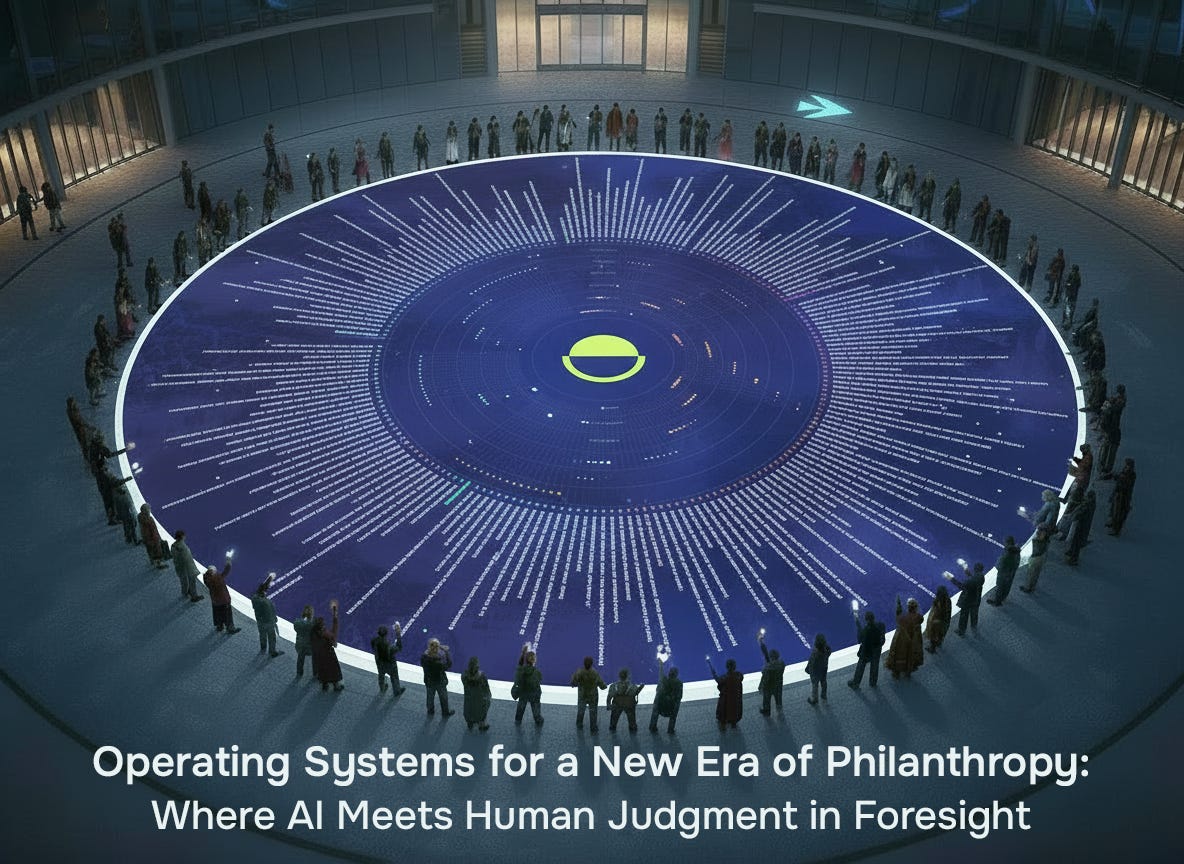
Next week we're running an online workshop on the future of philanthropy with Horizon 2045 and Global Philanthropy Forum. We'll explore how to track the signals reshaping giving, and how to use Envisioning's tools to navigate what's emerging. If this sounds interesting, join us.
Vibe Coding Workshop in Amsterdam (Feb 6)
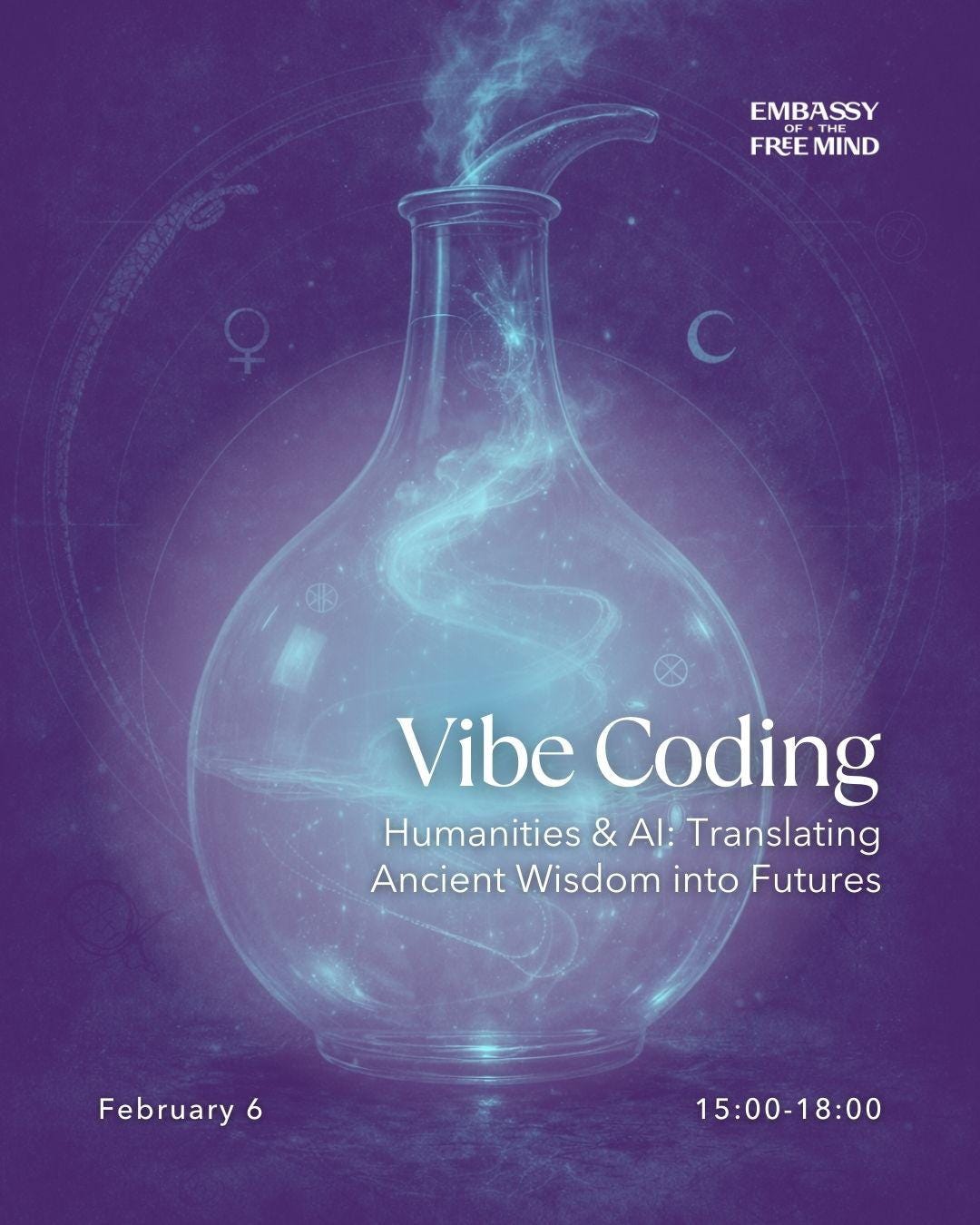
The Embassy of the Free Mind in Amsterdam is a space for free thinkers. Last year Derek Lomas and I started running hands-on vibe coding workshops there for non-coders who want to build apps to solve their own problems. I think the best use for AI right now is personal software development, and I’ve been experimenting with ways to get more people doing it. Register here if you’re interested.
Kate Crawford (80 min)
How companies should be structured after AI (5 min)
Applicable tips if you have a business.
It’s not a bubble (35 min)
Part 1: Ben Horowitz.
Part 2: Marc Andreesen.
Quick Links:
Cory Doctorow at CCC25 on building an internet resistant to platform “enshittification” and concentrated power. Move Fast and Break Kings (60 min talk).
Ethan Mollick on the AI water-usage narrative, adding context and nuance to a debate that often lacks comparative framing. Thread on X.
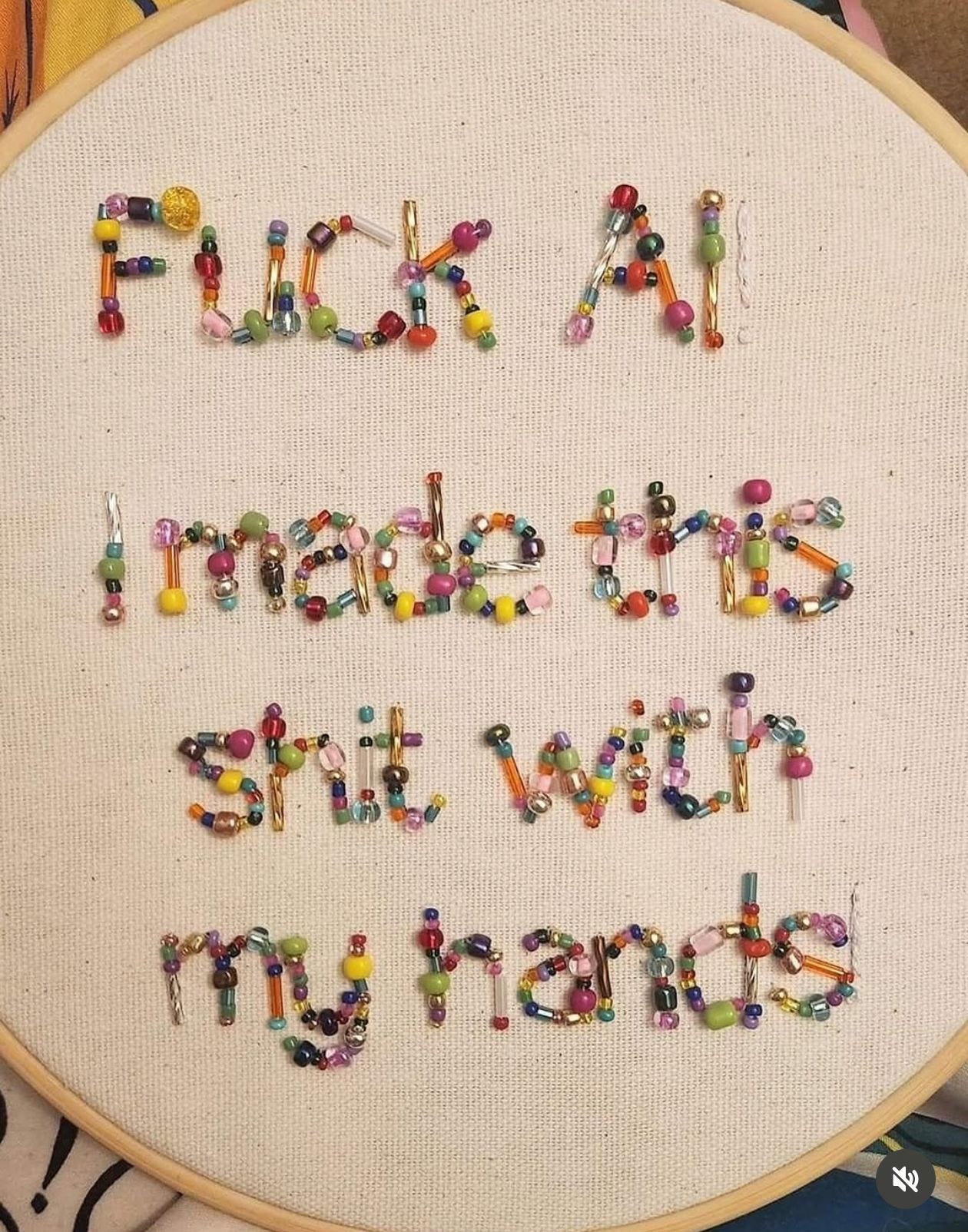
A short visual example showing how language model intelligence differs fundamentally from human intelligence. Via Instagram (thx VM!).
Linus Torvalds sharing his take on the idea of “vibe coding” and what it may (and may not) mean for the future of software development. Short video.
Mike Monteiro’s talk at Y Oslo on design responsibility and the unintended consequences of “helpful” tech. A sharp, provocative perspective from a self-described “design irritant.” Highly recommended. Via Greg.
A designer created a glossary of non-existent but plausible words that describe different feelings about time. Glossary of Time. Via Frits.
If Artificial Insights makes sense to you, please help us out by:
📧 Subscribing to the weekly newsletter on Substack.
💬 Joining our WhatsApp group.
📥 Following the weekly newsletter on LinkedIn.
🦄 Sharing the newsletter on your socials.
Artificial Insights is written by Michell Zappa, CEO and founder of Envisioning, a technology research institute.
So much value and fascinating curation of mind-blowing insights in this post! Ocean boiling!